As the first month of the new year is wrapping up, Each Green Corner wanted to share a couple highlights from last year from our Portola and Roosevelt classrooms. We hope the new year brings in as many joyful experiences as it did last year, and Each Green Corner is determined to continue providing students and community members with enriching learning opportunities.
Portola Classroom Portola Classroom 2025 Highlights
Return of Plant-enstein
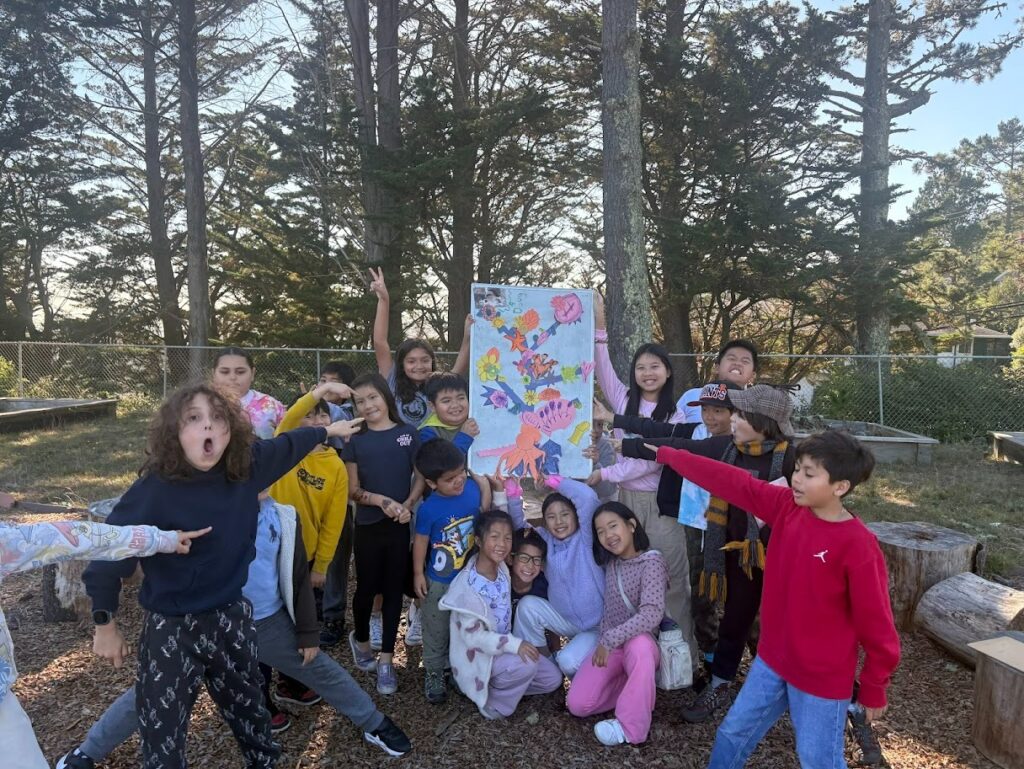
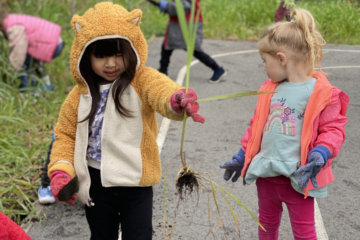
Plant-monculous, or Plant(frank)-enstein, was a new lesson that brought lots of fun and creativity to the classroom October 2025. During our unit on food production, in order to learn about the parts and function of plants, students had to work together to create their own Plantmonculous or Plant-enstein, names coined by the students’ themselves in celebration of the spooky season. We encouraged students to think about nutrient collection, and environmental hazards, that make plants the way they are. Then, we let their imagination do the rest in their own creative interpretations.
At the end of class, we created a story behind each result: some plants had too many leaves and no roots to support them while others had too many fruits and no leaves and branches to supply them. The debate at the end of the class as to the eventual fate of our Plant-enstein monster was silly, but encouraged students to look at all plants as a living collection of functional parts like any machine or animal.
Learning about plant parts and functions supplements our students’ understanding of “food production” in the first unit. Students were able to come to their own conclusions for our questions like “where does food come from?” and “what do plants need to thrive?” Students were full of energy and excitement to learn about the science and mechanics behind plants, and ultimately our food system, and along the way, made clever references to 19th century science fiction.
Wintertime Preparations at Portola
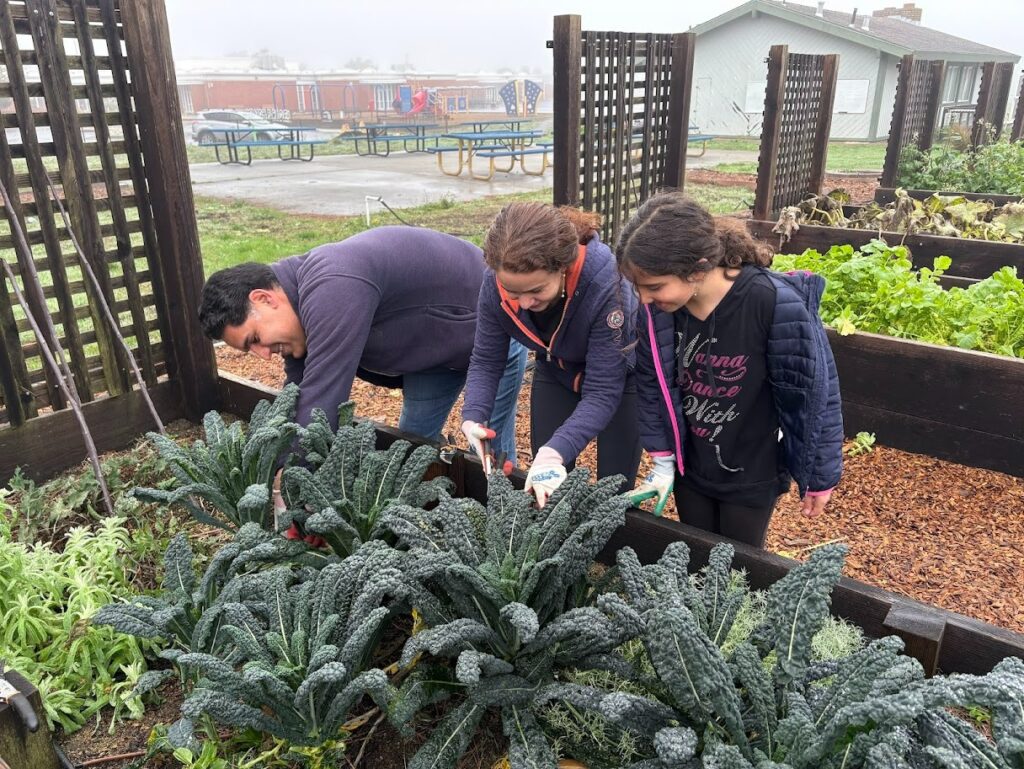
Last year, during the month of December, Portola Elementary made lots of progress as we finished installations and became more familiar with the site’s unique growing conditions. During one of the month’s workdays, we managed to harvest 75 pounds of produce—a mix of carrots, radish, squash, and kale—for our local food bank! And, due to popular demand from our students, we also introduced ten strawberry plants to our garden, one of several new crop experiments going on this spring. We also aimed to grow a larger variety of root vegetables this past year to better understand what kinds of vegetables could thrive in the unusually cold and windy summer.
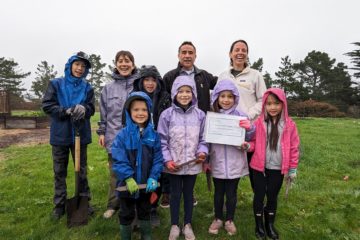
Beyond edible plants, we took our big first steps in transforming the huge space at Portola Elementary into a sanctuary for native pollinators and outdoor education! Volunteers at our November workday helped turn a huge amount of soil and spread over 100,000 seeds of different flowers and bushes that are native to the California coast. Unlocking the true potential of our space at Portola means transforming the empty field into an ecosystem that mimics our California coast by growing species that naturally capture fog in the dry months and heat in the winter.
Behind the scenes we were also working on special projects to jumpstart this ecological transformation: one to provide ideal growing conditions to our fruit forest of over 30 trees, and another to expand our seedling starting capabilities. Before summer hits we are hoping to install a collection of temporary windbreaks to stop the constant 15mph winds that are giving our trees a hard time getting started. Our second project is a greenhouse to extend our growing season, raise seedlings for our San Bruno sites and community, and have a classroom space for the coldest, rainiest days. We are excited to see where the year takes us as we continue on with new and existing projects.
Roosevelt Classroom 2025 Highlights
Getting Started at Roosevelt
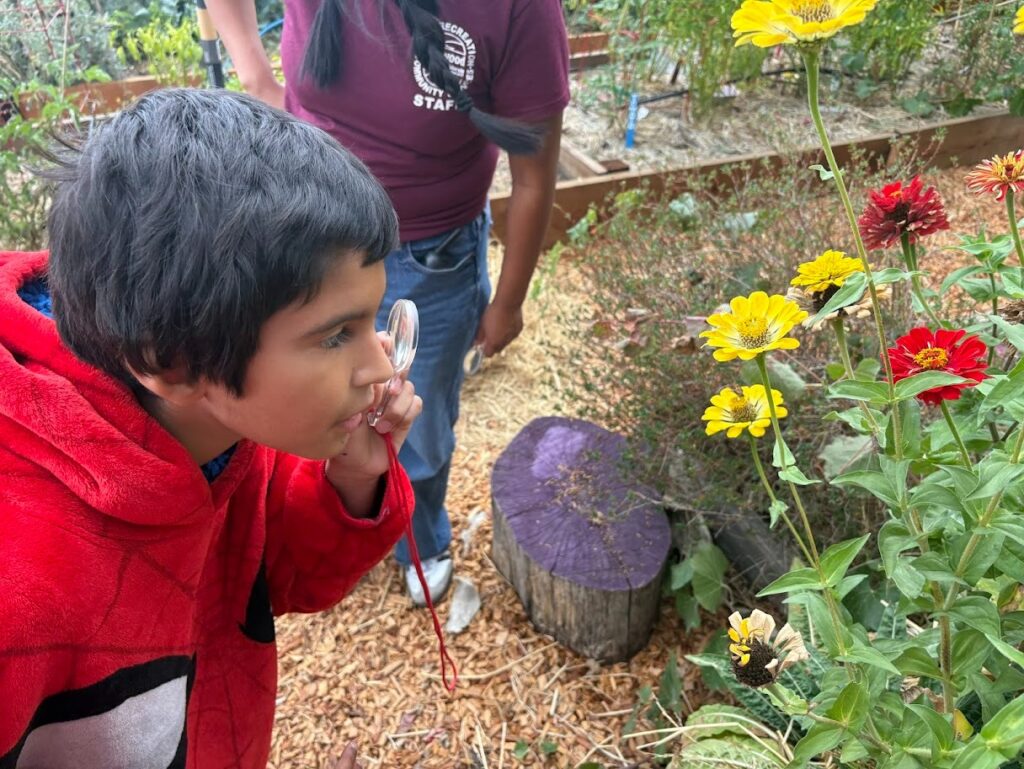
This past year was our first year of regular curriculum at Roosevelt elementary school. In September students were challenged to explore the garden’s plants and animal inhabitants with a bingo style scavenger hunt to get used to the new space. To learn about food “production” in our food system we needed our explorers to understand the ins-and-outs of a food producing space.
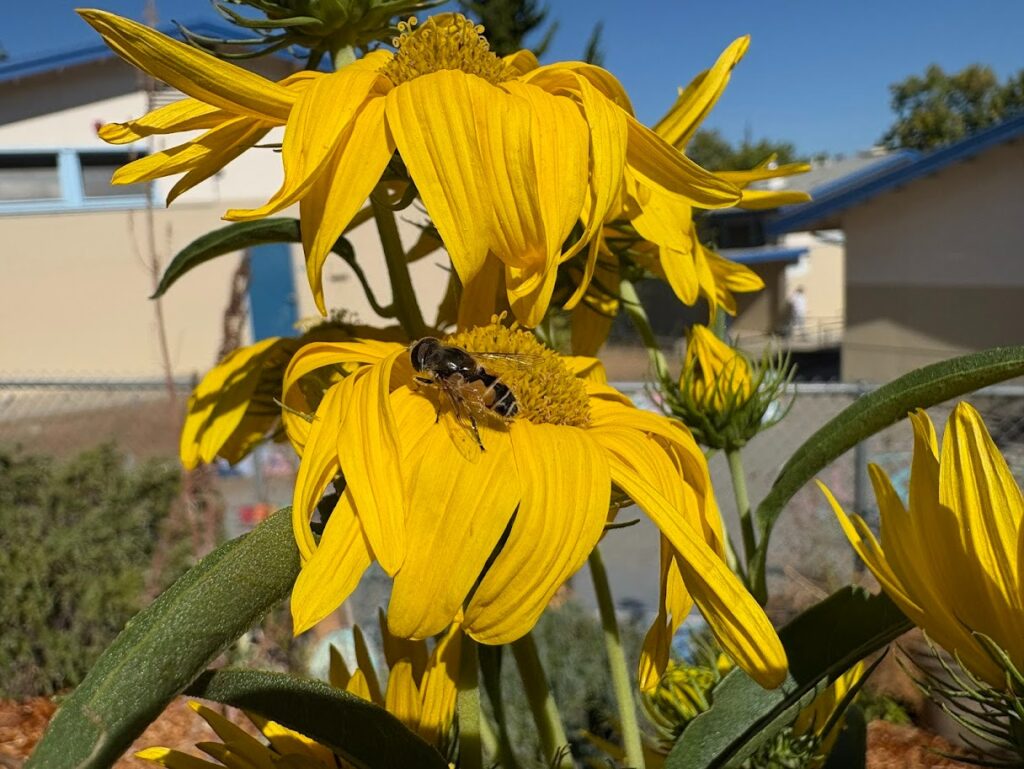
Another word we use for food producing space is “garden,” or “farm,” or anywhere people grow food. Our garden has a couple systems that any sustainable food production space needs. Students found our drip irrigation, our 3-bin composter, our garden beds, decomposers like ants and beetles, and finally pollinators like bees or butterflies. And, of course, the tiny orange dinosaur figurine that always finds a new comfy place to hide when no students are looking.
When students get the opportunity to slow down and search for tiny details, they tend to notice more about the place they are situated in. The students in this class found bugs, mushrooms, and vegetables they’ve never tried before. Most importantly, they left our food producing space with more curiosity about where their food came from than ever before.
Roosevelt’s Making Progress
The garden at Roosevelt made great progress last year, the space is nearly unrecognizable. This past summer, we completed the installation of our first four beds in order to replace old ones, which were inaccessible and in poor condition. Using the original footprint, while still making a few improvements, we managed to increase the beds growing space from roughly 190 square feet to 272 square feet! On top of that, we finished our drip irrigation, and managed to move six cubic yards of compost and hay into the garden to properly amend the new beds for our upcoming season.
Last year, we also experimented with different crops and varieties to see what works best in the new garden, and grow more of what worked during 2024. This past year, Roosevelt’s garden also saw exciting new additions including garlic, onions, spinach, and lettuce that we seeded together at our December workday. We also collected and raised seedlings from an artichoke already growing in the space and turned the back fence into an artichoke forest. Perennial food forests take very little maintenance, and can provide the community with plenty of food for years to come.
Our special projects last year focused on repairing the classroom which, after a couple years of neglect, started to fall apart under our students. We also wanted to install a pergola over the classroom for shade protection in the hot months, which will double as a grape trellis for the 10+ year old vines we discovered near the classroom. Overall improvements and repairs will make the space more inviting, productive, and perfect for learning!
0 Comments